Many field engineers experienced the same frustration with substation commissioning. Modern digital grids are getting complex. You cannot just wire things up and hope for the best. Precision timing has moved from being a luxury to a critical safety need. Today, I want to discuss why 5 microseconds makes all the difference.
The Growing Need for High Precision Timing
Substations are changing fast. We are moving away from old copper wires. Fiber optics and digital protocols are the new standard. This shift brings great benefits for automation. However, it also demands perfect synchronization across the entire network. Most people think of time in seconds or milliseconds. In our world, we talk about microseconds.

Line differential protection depends on comparing current at both ends of a line. This requires both relay sets to look at the power at the exact same moment. If they are out of sync, they see a phase shift. To a relay, a small timing delay looks like a fault. According to industry research, a 1 millisecond error can cause a 10 percent error in current measurement. Modern high speed protection needs even tighter windows. This is where 5µs accuracy becomes the benchmark. It ensures the relay has a stable and reliable reference point.
Common satellite systems provide our primary time source. Most testers depend solely on GPS. But relying on one constellation is risky. Signal jamming or spoofing risks are real concerns for utilities. Using a dual constellation approach is always recommended. Having access to both GPS and Beidou adds a layer of security. If one signal is compromised, the other keeps the grid steady. This resilience is vital for maintaining critical infrastructure in active energy markets.
Challenges in Field Timing Verification
Testing in the field is much harder than in a laboratory. You deal with weather and remote locations. You also handle heavy equipment. Most traditional test sets are heavy. Dragging a 30kg box across a gravel yard is not fun for any engineer. Substation environments are also electrically noisy. High voltage equipment creates electromagnetic interference. This noise can mess with satellite receivers.
Good test sets must have robust antenna systems. They need to filter out environmental noise to find the satellites quickly. Some system takes 20 minutes to get a lock. That is lost time in the field. You want a system that finds its position and timing in under two minutes. End to end testing involves two engineers at different locations. They must trigger their tests at the exact same microsecond. If your test set does not have an integrated GNSS receiver, you need extra hardware. This adds more cables and more points of failure. Integrated solutions represent the easiest path to success.

Enhancing Reliability with Modern Test Solutions
Engineers often ask about equipment choices. Industry giant companies do offer great tools. However, the investment is huge for many firms. I have seen smaller companies struggle with these costs. You can get professional results without spending six figures.
Leveraging the KINGSINE KFA320
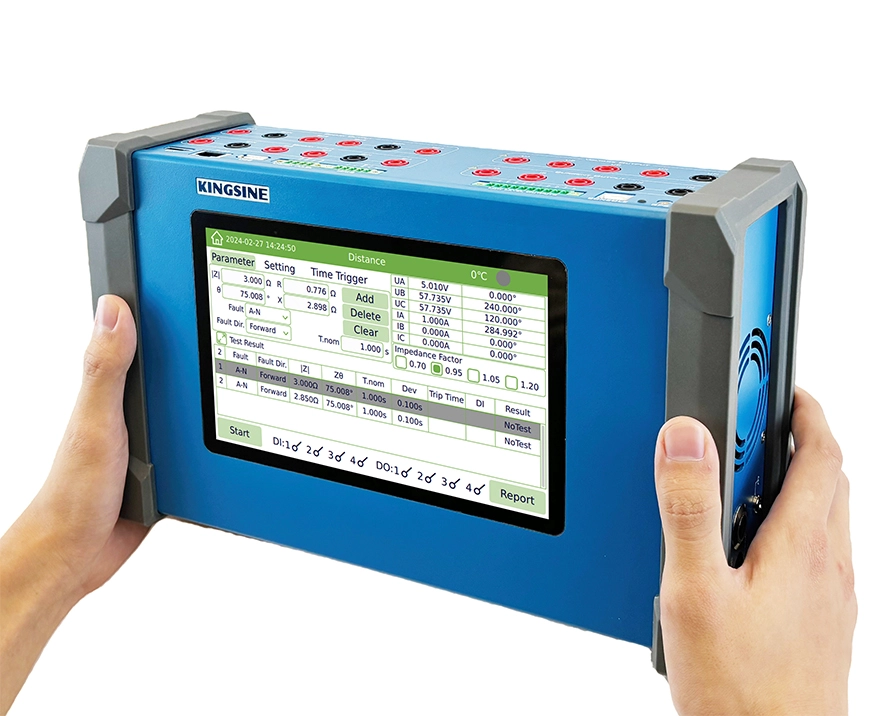
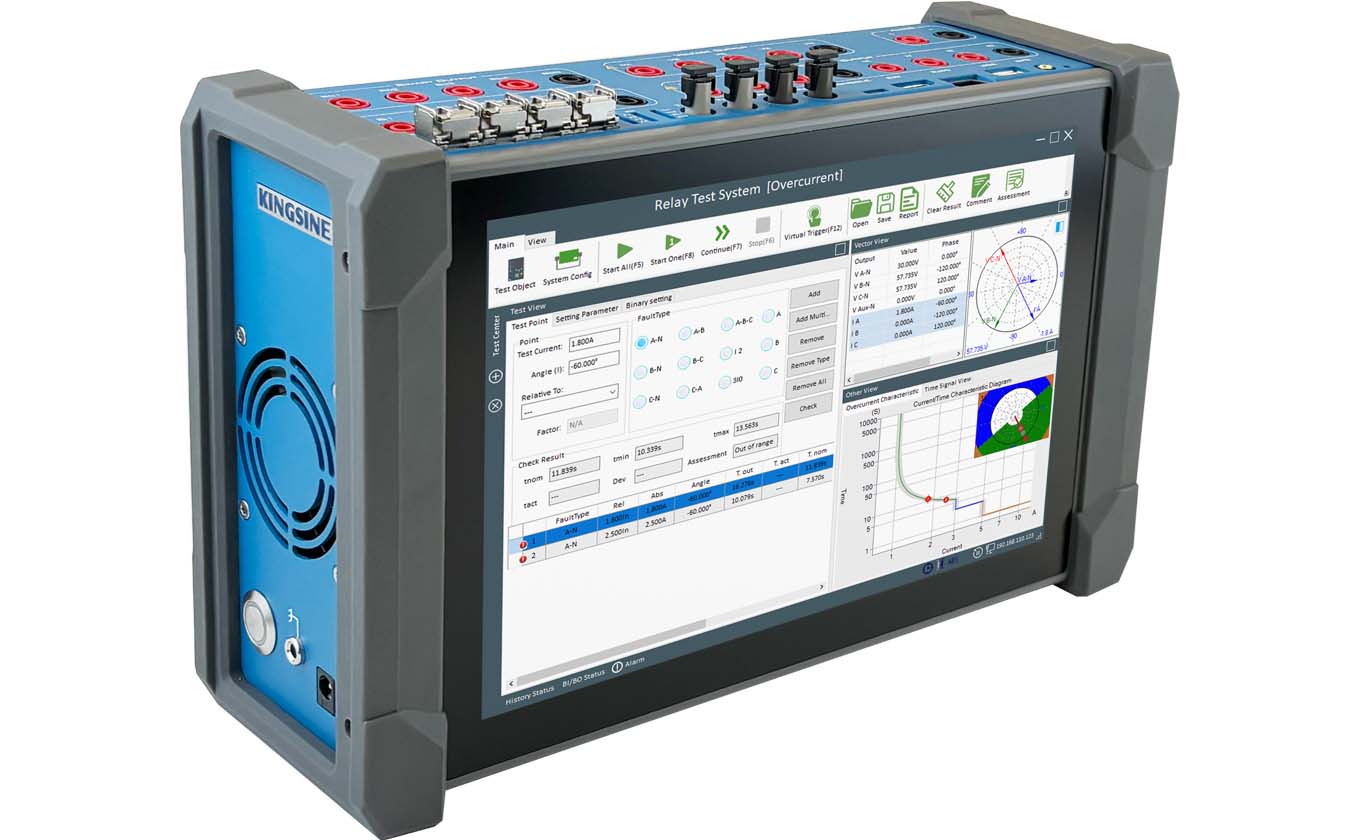
The KFA320 is a 6 phase relay test set that stands out in the field. It weighs only 3.8kg. You can carry it onto an airplane easily. Despite its small size, it delivers 0.05 percent output accuracy. What really impresses me is the integrated timing. It supports both GPS and Beidou satellites natively. This allows for that 5µs synchronization without extra modules.
Professional Support and Rapid Repair
Substation work has strict deadlines. You cannot wait months for a repair. I appreciate the modular design in modern hardware. KINGSINE uses a plug and play architecture. If a module fails, you can swap it in 10 minutes at the site. Their English technical team provides video guidance to help you through the process. This kind of fast response keeps projects moving forward.
Steps for Successful Synchronization Testing
Setting up a high precision test does not have to be hard. Follow these simple steps for a reliable result.
Position the satellite antenna with a clear view of the sky.
Connect the antenna to the test set before powering on.
Check the GNSS status on the 10.1 inch touch screen.
Verify that both GPS and Beidou signals have a stable lock.
Confirm the internal clock has synchronized to under 5µs.
Set the trigger mode to satellite time for your test plan.
Run the test and record the synchronized trip times.
Improving Grid Safety Through Better Testing
Using high precision timing is about risk management. We want to avoid nuisance trips. We also want to prevent equipment damage. Precision tools lead to better data. Better data leads to a safer grid. Whether you work in a lab or a muddy field, accuracy is your best friend.
Frequently Asked Questions
What happens if I lose the GPS signal during a test?
Most modern sets like the KFA320 have an internal oscillator. This holds the timing steady for several minutes. You can usually finish your current test run without issues.
Do I need a separate clock for IRIG-B testing?
No, many integrated units generate their own IRIG-B signals. This simplifies your wiring and reduces the chance of manual errors.
Is 5µs accuracy always necessary?
For basic overcurrent relays, it might be overkill. However, for line differential and synchrophasor tests, it is non negotiable. It is better to have more precision than you need than not enough.
How often does the KFA320 require calibration?
While the standard industry cycle for test equipment is often one year, we confidently recommend a 2-year calibration cycle for the KFA320. This recommendation is based on the KFA320’s exceptionally high design accuracy (0.05 grade) and the premium quality of its internal components. Since 0.05% accuracy far exceeds the typical requirements for field relay testing, the device maintains its precision over a longer period. However, please always follow your local industry regulations or company policies if they mandate a specific annual schedule.
 English
  日本語
日本語  français
  Deutsch
  Español
  italiano
  русский
  português
  العربية
  Polska