If you have ever carried test equipment up a wind turbine tower, you know the struggle. Wind and solar farms often sit hours away from paved roads. The environment is harsh. You rarely have elevator access to the nacelle. Getting heavy laboratory gear out to these sites feels like a major operational bottleneck.

The transition to renewables has fundamentally reshaped our approach to field operations. The core of our job remains the same. We still need to verify protection relays. We still need to run secondary injection tests to ensure clearing times meet grid compliance. But the logistics of how we do this have shifted entirely. Moving a fifty pound machine across a muddy solar field is no longer a sustainable option.
The Physical Toll of Remote Testing
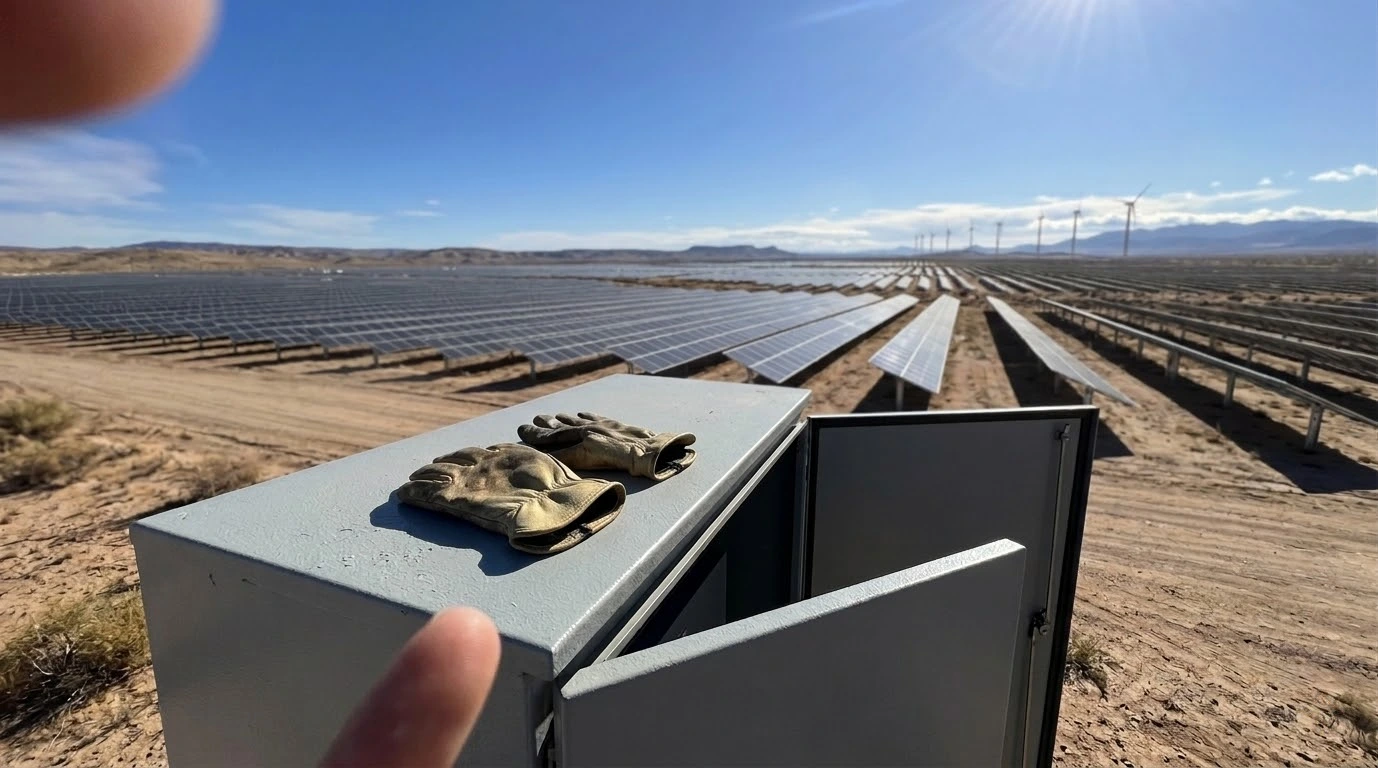
When working on distributed generation sites, weight is your biggest enemy. Think about a typical solar inverter station. These pad mounts are often scattered across hundreds of acres. You might be driving an off-road vehicle just to get close. From there, you carry your laptop, tools, safety gear, and tester on foot.
A traditional protection tester handles complex logic beautifully but punishes the technician in transit. Pushing heavy gear across loose gravel wears you down. This fatigue slows down commissioning schedules. We need equipment that engineers can carry in one hand. We need an easy to carry relay tester for wind farms that survives bumpy rides. If your crew spends less time wrestling with gear, they test more relays per day.
Essential Features for Renewable Relay Testing
So what should you look for when upgrading your field kit? Let us focus on practicality.
Stable Power Under Generator Operation
Remote sites often lack stable auxiliary power. Sometimes you run off a portable generator. Your secondary injection system must handle dirty power without tripping offline during a critical fault simulation.
High Visibility Touch Interfaces
Connecting a laptop under glaring sun or driving rain is miserable. Screen glare makes reading trip times almost impossible. A built-in touch interface designed for high visibility changes the game completely. You leave the laptop in the truck. You plug in your test leads and tap the screen to run your macro.
Sub Ten Kilogram Weight Limits
An ideal lightweight protective relay tester should sit comfortably under the ten kilogram mark. When climbing a ladder inside a turbine tower, every kilogram counts. Getting the weight down means engineers move faster and work safer.
Balancing Capability and Flexibility
For years, the industry accepted a compromise. If you wanted portability, you sacrificed output power. If you wanted six phases for differential testing, you accepted a back breaking enclosure. That gap is finally closing.
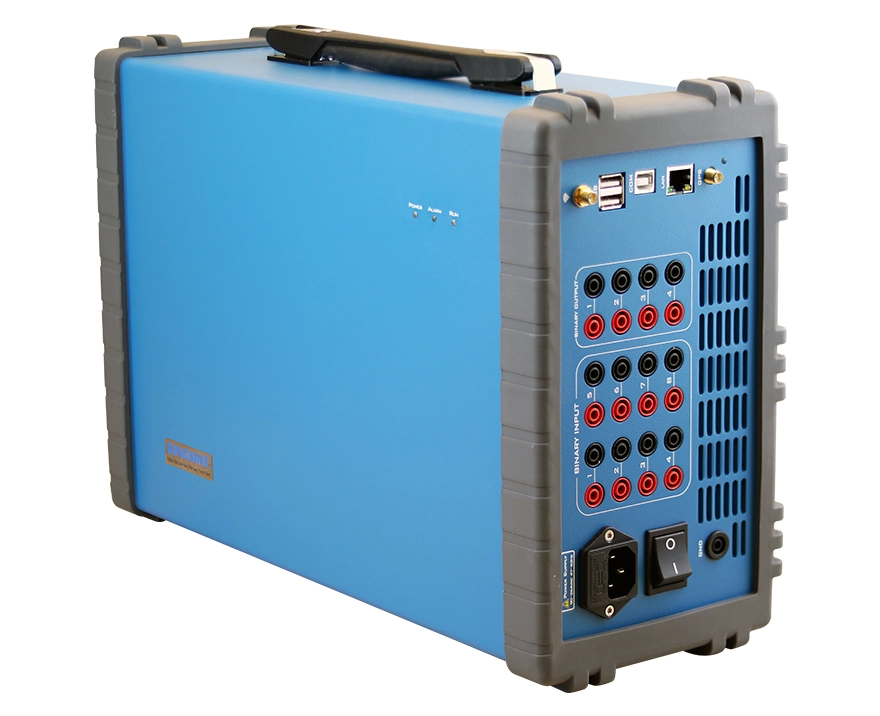
The KFA320 by Kingsine Electric is surprisingly small but punches well above its weight class. At under four kilograms, you can physically bring it onto flights as hand luggage.

Despite the extremely portable relay test set profile, it delivers a high accuracy class of 0.05 percent. This handles standard overcurrent just as easily as complex distance or differential protection schemes. Technicians can run predefined test templates directly on the capacitive screen. Kingsine also uses a clever plug and play module design. If a channel fails in the field, you swap a module instead of shipping the whole unit back for factory repair.
Shift to Agile Testing
Field testing cannot be a laboratory exercise anymore. Renewable projects have aggressive timelines. Delays cost severe financial penalties.
While legacy brands offer incredible precision, evaluate if you need a sports car for a pickup truck job. Getting your results and proving grid compliance efficiently is what matters. Upgrading to agile testing tools might be the easiest efficiency gain your operation makes all year.
Frequently Asked Questions
What is the difference between protection class and metering class accuracy?
Protection class focuses on capturing faults quickly under extreme overcurrent conditions. Metering class requires highly exact measurements under normal load conditions. High precision field testers often bridge both requirements in one unit.
Can a portable test set handle six phase differential testing?
Yes. Modern digital amplifiers deliver high output power in a small package. You can inject all six phases needed for transformer differential relays without carrying heavy auxiliary booster units.
How does modular design reduce maintenance delays during commissioning?
Traditional equipment requires shipping the entire unit back to the manufacturer for repair. A modular architecture means you can slot in a replacement channel board directly on site. Operations resume in minutes rather than weeks.
 English
  日本語
日本語  français
  Deutsch
  Español
  italiano
  русский
  português
  العربية
  Polska