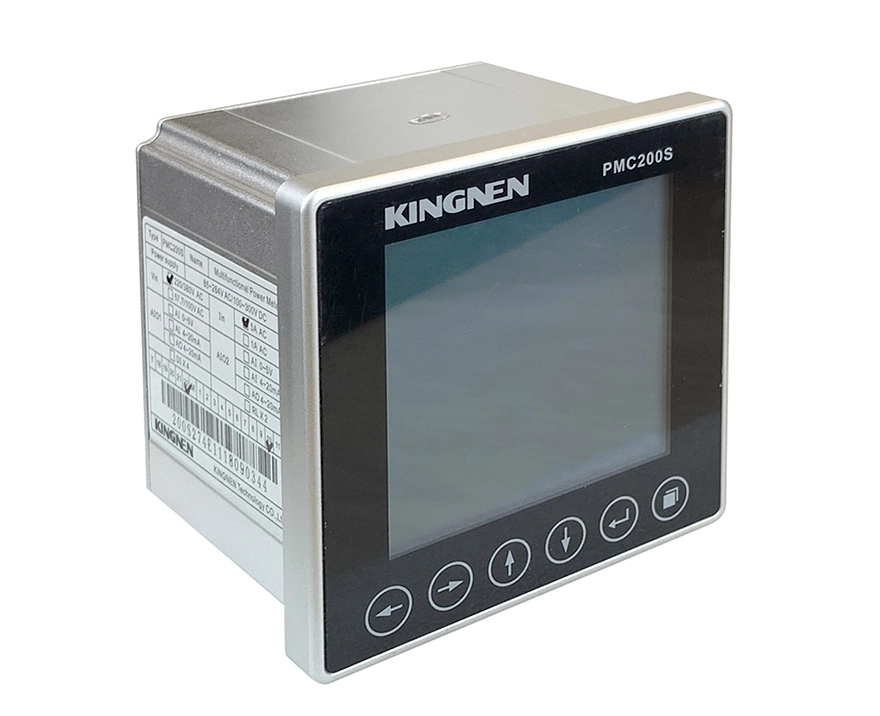
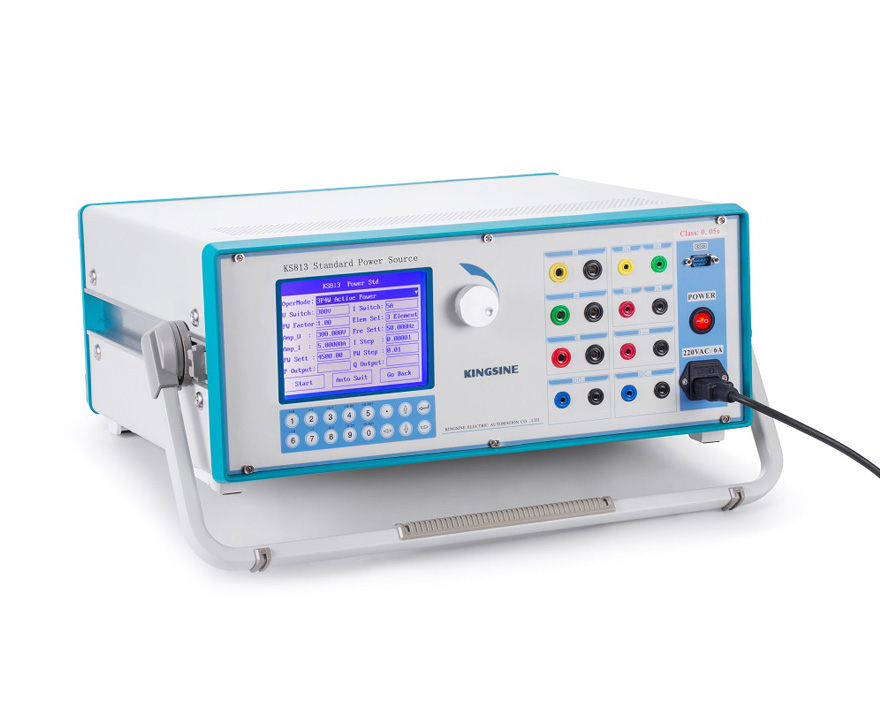
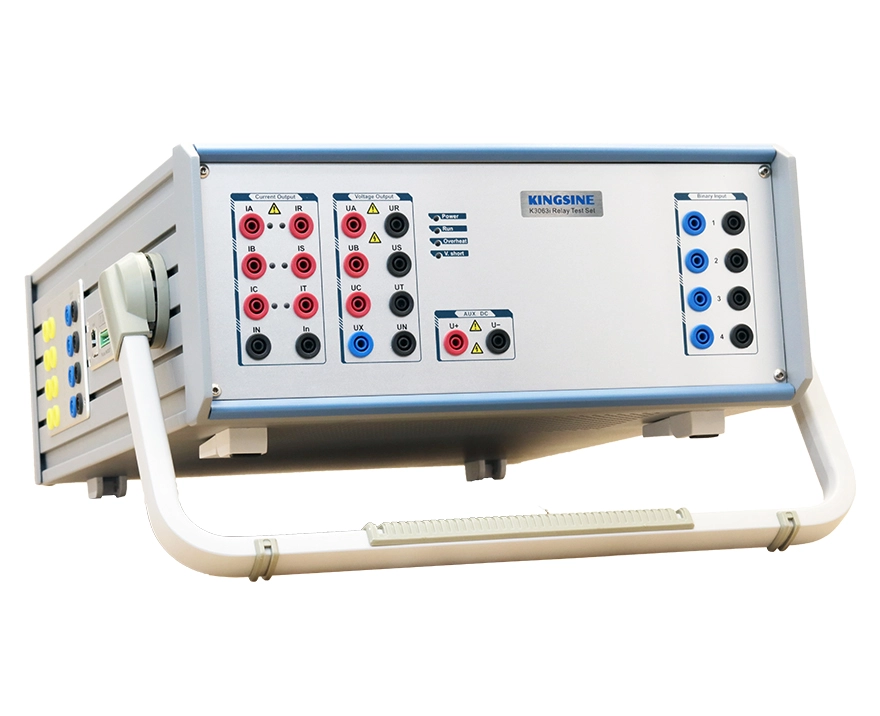
If you're a field engineer, you've probably noticed that digital substations are changing the game for protection and control testing. One of the most significant shifts is the move from traditional instrument transformers to Low Power Instrument Transformers (LPITs). While LPITs offer safer operation and a smaller footprint, they also introduce new considerations for secondary injection testing. On the primary side, the testing process remains the same as with conventional transformers. The real difference lies on the secondary side, where Low-Level Voltage (LLV) signals replace the traditional 1A/5A or 100V outputs.
Navigating New Challenges in Substation Testing
In a traditional secondary injection setup, you inject 1A/5A or 100V signals directly into the relay. LPITs change this on the secondary side: instead of high-power outputs, the relay receives millivolt-level LLV signals. This eliminates the risk of open-circuit CT saturation, which is a major safety benefit, but it also means the signals are far more sensitive to electromagnetic interference (EMI) and lead impedance.
The Reality of Modern Field Work
For field engineers, the challenge is no longer about sourcing high power. It is about precision and signal integrity at the relay input. Many legacy test sets lack native LLV output capability, forcing engineers to use adapters and multiple converters. This adds unnecessary complexity and potential failure points to what should be a simple secondary injection test.
Complexity is the Enemy of Reliability
When a testing workflow becomes too complex, the risk of human error increases. In a digital substation, a single misconfigured mapping in your software can lead to an unexpected trip.
We hear this frustration from field teams all the time: testing tools are becoming as complicated as the systems they're meant to verify. This creates a real bottleneck, especially when you're up against tight commissioning deadlines.
The LPIT Signal Chain
To simplify the testing workflow, we first need to understand the signal chain. This chain begins at the primary sensor, where the physical quantity is converted into a low-level signal. Unlike traditional transformers, many LPITs use sensors like Rogowski coils or capacitive dividers. These sensors follow specific standards, primarily IEC 61869-10 and 61869-11.
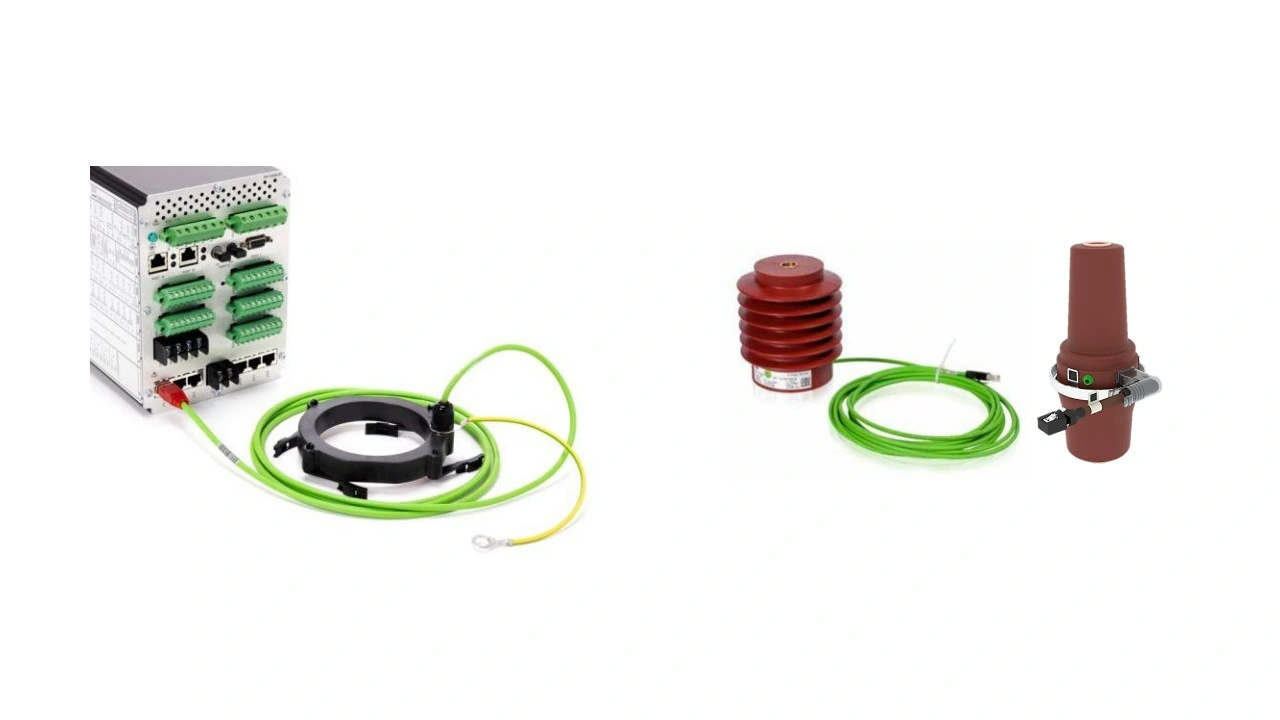
Rogowski Coils vs. Capacitive Dividers
Rogowski coils don't saturate, which is great for transients.
Capacitive dividers, on the other hand, provide a direct voltage ratio but are highly sensitive to the burden of the connected device.
The Role of Low-Level Voltage (LLV) Signals
LLV signals are the heartbeat of the modern digital bay. These signals typically range from a few millivolts to a few volts. Because the power level is so low, the impedance of your test leads matters significantly. High-quality shielding is not optional; it is a requirement. In the field you may have seen more "failed" tests caused by poor shielding than by actual relay malfunctions.
A Systematic 7-Step Approach to LPIT Secondary Injection Testing
Simplifying the field workflow starts with a standardized procedure. You do not need a laboratory environment to get accurate results if you follow this methodical approach.
Preparation and Safety
Relay Isolation: Ensure the protection relay is in test mode. This prevents GOOSE messages from triggering upstream breakers.
Terminal Verification: Identify the LLV input pins. These are much smaller than traditional terminals and require precision probes.
Execution and Measurement
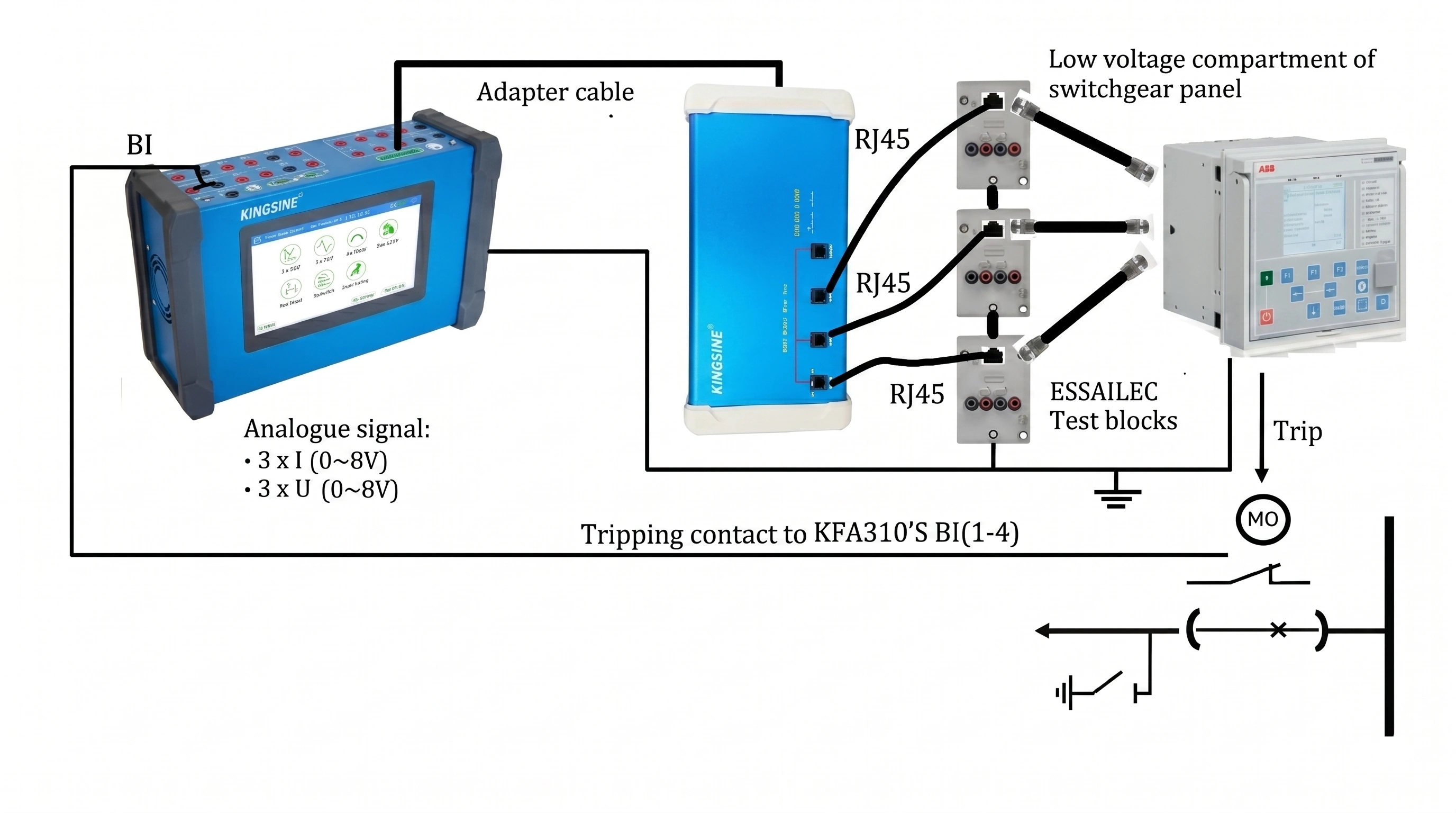
Signal Impedance Matching: Use a dedicated adapter if your test set lacks native low-level outputs. This ensures the relay "sees" a signal that mimics the actual sensor.
Injection and Magnitude Check: Inject a nominal signal. Verify that the relay's measurement view matches your injected value.
Phase Angle Validation: Check the phase relationship. In digital systems, a 180-degree error is easy to commit during software mapping.
Functional Timing: Run your pickup and timing tests. Observe how the relay handles the simulated transient response from the sensor.
Document and Clear: Export your report immediately. Clear all test flags before returning the bay to service.
.webp "LPIT__(3).webp")
Compact Solutions for Digital Substation
Efficiency in the field often comes down to the equipment you carry. In modern digital substations, especially in modular Battery Energy Storage Systems (BESS), space is extremely limited. Carrying a 20kg test set into a cramped container is inefficient and physically taxing.
Moving Away from Heavy Gear
The industry is moving toward more compact, specialized tools. A lightweight tester like the KFA310 or KFA320, mini and lightweight, represents this shift.
By pairing a handheld or small-form-factor device with a dedicated external LPIT Adapter, engineers can eliminate the need for external power amplifiers for most routine tasks.
.mp4_20260515_113648.940.webp "LPIT_Test(SK).mp4_20260515_113648.940.webp")
The Advantage of Plug-and-Play Modularity
At KINGSINE, We believe modern testing equipment should be as easy to maintain as it is to use. That's why we emphasize a modular design.
If a module fails in the field, you can replace it in 10 minutes with remote guidance. This "plug and play" approach removes the need for long shipping delays and factory recalibrations, keeping your projects on schedule.
Multi-Vendor Compatibility and Real-World Applications
A common concern with simplified testing is compatibility across different manufacturers. A well-designed LPIT simulation must bridge the gap between various proprietary technologies.
Verified Field Applications: Siemens and ABB
For instance, using the KFA320 with the KFE200 LPIT Adapter to perform sample tests on a Siemens SIPROTEC 7SY82 relay has become a standard procedure for many global service teams. Similarly, simulating the low-level output for ABB devices, such as the KEVA 17.5 B20 voltage sensors, requires a test set that can handle specific LLV ranges reliably.
.mp4_20260515_132119.754.webp "LPIT_Test(SK).mp4_20260515_132119.754.webp")
The Value of a Unified Testing Companion
The goal is to have a testing companion that works across your entire fleet. By focusing on a standardized LPIT Adapter, KINGSINE allows engineers to use one familiar interface to manage diverse relay types. This reduces the time spent on software setup and allows the team to focus on the technical integrity of the protection system.
.mp4_20260515_113826.467.webp "LPIT_Test(SK).mp4_20260515_113826.467.webp")
FAQ
What is the main difference between LPIT and traditional CTs?
Traditional CTs output high-current signals (1A or 5A) and can saturate or cause high-voltage spikes if open-circuited. LPITs output low-voltage signals (millivolts), which are safer but more susceptible to noise and interference.
Can I use a standard relay tester for LPITs?
Not directly. Standard testers output high power. To test an LPIT-compatible relay, you need a device that can output Low-Level Voltage (LLV) signals, often requiring an adapter to ensure accuracy and impedance matching.
Why is equipment weight important in digital substation testing?
Digital substations often have many small IEDs in tight spaces. Lightweight, battery-operated equipment like the KFA310 allows engineers to work faster and more safely in cramped environments without needing external power sources.
 English
  日本語
日本語  français
  Deutsch
  Español
  italiano
  русский
  português
  العربية
  Polska